

Tipping in India can be confusing, particularly for American travelers accustomed to adding 18–20% to almost everything.
How much should you give your private driver after two weeks on the road? What about a guide at the Taj Mahal, or the person who carries your luggage to your hotel room?
After more than 20 years of traveling through India, you’d think I’d have settled on my own tipping guidelines. Sorry to say, my opinions continue to evolve.
I’ve been told to tip a private driver anywhere from $10 to $20 per person, per day. When I’ve mentioned those figures to Indian friends, some have considered them outrageous.
I can understand both perspectives.
Below are some useful guidelines.
Tipping in India: A Quick Reference
These are suggested planning ranges, not mandatory charges or official Indian standards. They reflect a combination of published recommendations and my own approach to tipping.
| Service | Suggested tip | When to give it |
|---|---|---|
| Multi-day private driver booked through an operator | ₹500–₹1,500 per day | At the end of the journey |
| Private driver hired at an agreed day rate | Additional tip optional | Pay the agreed amount |
| Full-day guide through a travel agency | ₹700–₹1,200 | End of tour |
| Half-day guide through a travel agency | ₹400–₹700 | End of tour |
| Guide hired directly at a monument | Agreed all-inclusive price | Additional tip optional |
| Airport transfer driver | ₹100–₹300 | At drop-off, discretionary |
| Hotel porter | ₹50–₹100 per bag | When luggage arrives |
| Hotel housekeeping | Optional; I don’t generally tip separately | During the stay |
| Shared hotel gratuity box | Discretionary | During the stay or at checkout |
| Restaurant | 5–10% for good service | After checking the bill |
| Taxi or auto-rickshaw | Round up the fare | End of ride |
| Chai stall, dhaba, or street-food vendor | Not expected; I often round up | At payment |
For drivers and guides, the figures above are for the vehicle or group, not automatically for each traveler.
For easy comparison, USD equivalents throughout this article use an approximate reference rate of ₹100 = US$1. Actual exchange rates fluctuate.
How Much Should You Tip a Private Driver in India?
For me, this is the most interesting tipping question, and the one where I find the greatest difference of opinion.
I’ve traveled extensively through India with private drivers, including long journeys covering several states. When I’m accompanied by the same driver for an extended trip, I generally give one gratuity at the conclusion of our journey rather than tipping every day.

The Difference Between ₹7,000 and $840
Some travel companies recommend tipping per vehicle, while others suggest amounts per passenger. The difference becomes substantial when you’re traveling with two or three other people.
Consider a 14-day journey with three travelers.
At $10 per person, per day, the driver receives $420. At $20 per person, per day, that becomes $840.
Compare that with ₹500 per day, which would total ₹7,000 (approximately US$70) for the entire journey.
Those are very different amounts of money.
What Is a Fair Amount?
I’ve discussed tipping with Indian friends who are surprised by the amounts foreign travelers are encouraged to give. And I understand their perspective.
But I also think about what we’re asking these drivers to do.
While I’m exploring a monument or enjoying a leisurely lunch, my driver may be dealing with parking attendants, moving the vehicle, or waiting for hours.
On the highway, there are trucks, scooters, cattle, and unpredictable traffic demanding constant attention. On a longer journey, he may be spending several weeks away from his family.
At our approximate reference exchange rate, a ₹500 gratuity amounts to just US$5 for an entire day’s service.
That seems modest to me.
Of course, five dollars has different purchasing power in India, and the gratuity is additional to the driver’s regular compensation.
I take all of that into consideration.
My Suggested Range
For a private driver accompanying you on a multi-day journey, I would budget ₹500–₹1,500 per day for the driver, paid as one gratuity at the end of the trip.
That’s approximately US$5–$15 per day, using our reference exchange rate.
Where you fall within that range depends on the length of the journey, the number of travelers, the demands of the itinerary, and the quality of the service.
For exceptional service, you may decide to give more.
When You’ve Negotiated an All-Inclusive Rate
There’s another situation I encounter regularly in India: hiring a driver for a day of sightseeing rather than an extended journey. In these cases, I don’t necessarily add a gratuity to the agreed price.
Take Goa, for example, where Uber hasn’t generally been a practical option on my visits and arranging a private car and driver can require a little more effort.
On one visit, I used GoaMiles, Goa’s local answer to Uber, operating within the state’s notoriously protective taxi industry. You might jokingly call it the taxi mafia’s officially sanctioned ride-hailing app.
What was supposed to be a simple pickup from my Airbnb and drop-off in central Panaji turned into something much better. I liked my driver, Feroz, so much that we discussed extending the arrangement into a full day of sightseeing around Panaji and the surrounding area.
We agreed on ₹3,000 (approximately US$30) for the day. He requested half upfront, with the balance payable when we parted ways.
Nothing more, nothing less.
We enjoyed the day so much that we arranged another eight hours together the following day, this time with more driving and 80 kilometers included, for ₹3,500 (approximately US$35).
One of those outings took us to Savoi Plantation, a 90-minute drive each way for a spice plantation and food tour. Without Feroz, I doubt I would have made the trip.
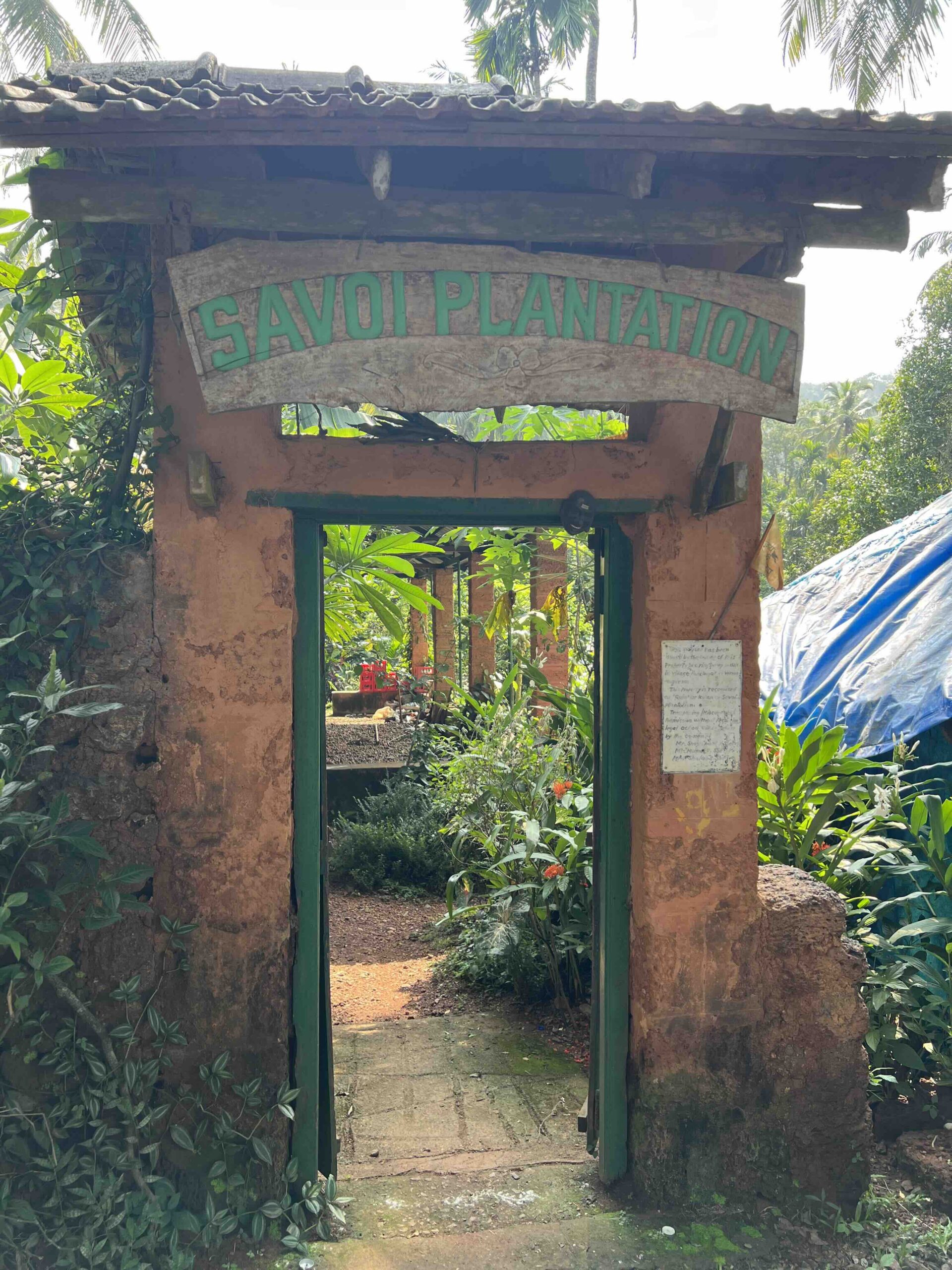
Again, I paid the agreed amount without adding a gratuity. Both of us were satisfied with the arrangement.
I had a similar experience in Ajmer.
I’d taken an Uber from my hotel, which was some distance outside the city. My driver, Prabhat, pointed out that I might have difficulty finding another car willing to take me back later that day.
He had a point.
Rather than worrying about arranging a return journey, we negotiated an all-inclusive rate of approximately ₹2,500 (US$25) for eight hours of sightseeing around Ajmer.
Prabhat took me wherever I wanted to go, waited while I explored, and eventually dropped me at the front gates of my hotel along the highway.
I paid Prabhat the agreed ₹2,500. We both left happy.
Now, I can already hear the comments. You paid ₹2,500 for eight hours? You got ripped off!
Maybe.
But here’s what I received for my money: a knowledgeable local driver who helped me put together an itinerary that made sense, got me through traffic in an air-conditioned car on a brutally hot day, and kept an eye on my belongings while I explored. I wasn’t dragging a backpack through crowded streets, searching for another ride after every stop, or wondering how I’d get back to a hotel well outside the city.
I saw more in less time, and one negotiation took the pressure of arranging transportation off my shoulders.
Could I have done it for less? Probably. Did I feel I’d overpaid? Not for a moment.
When I’ve negotiated an all-inclusive rate directly with a driver, I generally pay that amount without adding a gratuity. It’s different when I’m traveling for several weeks with a driver arranged through a tour operator, where I budget a separate tip. And if someone goes significantly beyond what we’ve agreed upon, I can always give more.
How Do You Pay Your Driver?
Cash is straightforward, provided you’ve set aside enough rupees before the end of your journey. For a longer trip, I plan ahead rather than scrambling for an ATM on the final morning.
UPI is widely used across India, but not every payment app available to foreign travelers supports personal transfers. I’ve used MONY for everyday purchases, although it doesn’t support payments to personal UPI accounts.
I discuss ATMs, credit cards, and MONY in more detail in Money, ATMs & Credit Cards in India.
For larger gratuities, I’ve repeatedly used Xoom, a PayPal service that can transfer money to eligible Indian bank accounts and UPI IDs.
In my experience, recipients have often received the money within five to ten minutes, with transfer tracking and notifications along the way. Delivery times, fees, and exchange rates vary.
Whatever method you use, confirm the arrangements with your driver before parting ways.
How Much Should You Tip a Private Guide?
A knowledgeable guide can make an enormous difference to your experience in India.
Perhaps they’re explaining the history of the Taj Mahal, introducing you to the intricacies of Jaipur’s City Palace, or walking you through Old Delhi’s crowded lanes.
The best guides do considerably more than recite dates and historical facts. They answer questions, adapt to your interests, and provide context that you might otherwise miss.
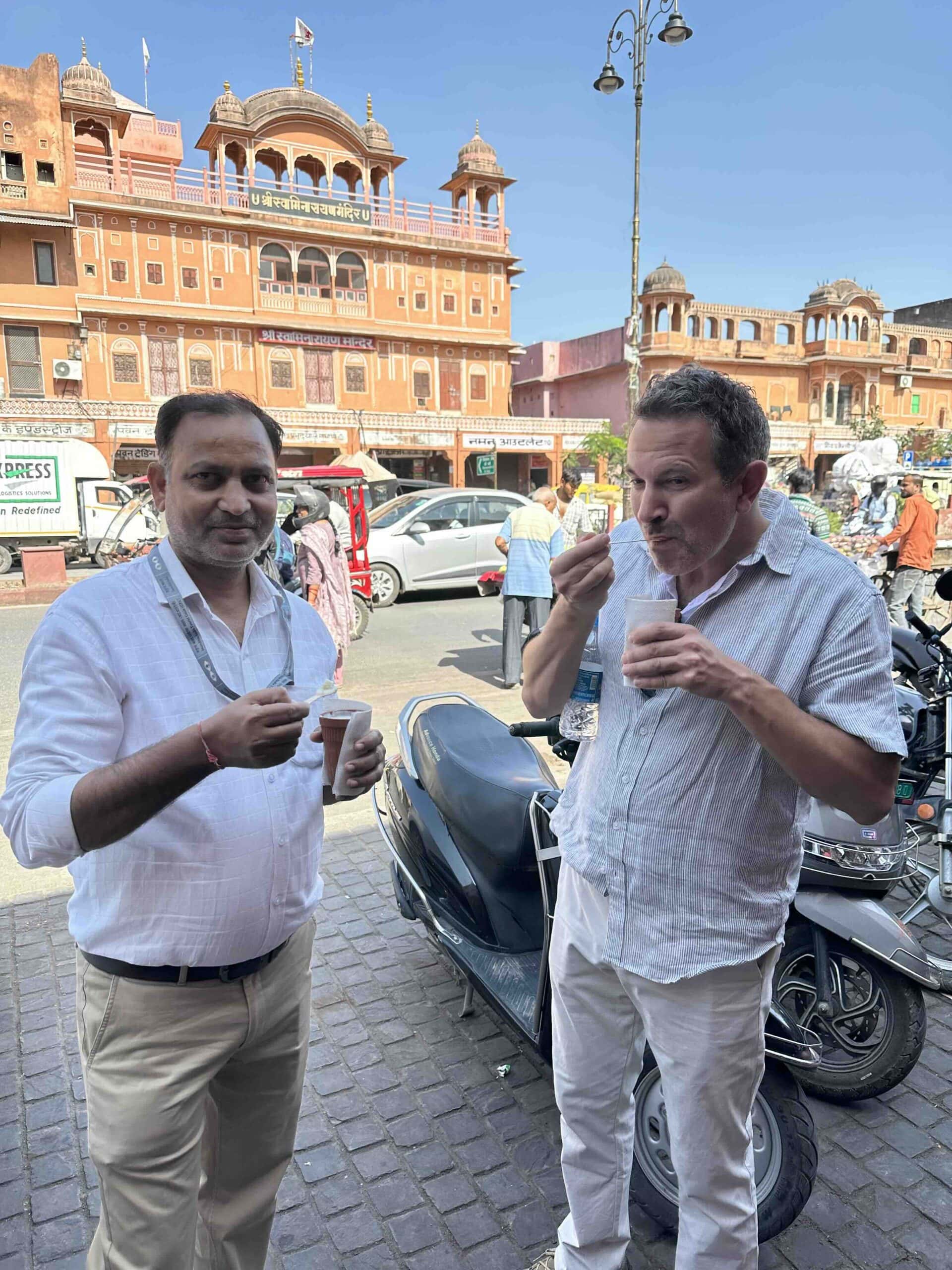
Guides Arranged Through a Travel Company
If your guide has been arranged through a tour operator, travel agency, or organized tour package, a separate gratuity may be customary, unless it’s already included.
For a half-day private tour, I’d consider ₹400–₹700 a reasonable starting point. For a full-day tour, ₹700–₹1,200 is a useful planning range.
These amounts are for the group, not automatically for each traveler. Exceptional service may justify more.
Hiring a Guide Directly at a Monument
I’ve hired countless guides directly at monuments and historical sites throughout India. In these situations, I approach payment much as I do when negotiating an all-inclusive day rate with a private driver.
We agree on one price for the entire service, including any gratuity.
Before agreeing, I make sure of three things.
First, the quoted price covers everyone in my group, whether I’m traveling alone or with several others.
Second, it covers the entire tour we’ve discussed, not just one section of a monument or historical complex.
And third, it’s the final amount. There won’t be an additional request for a tip when we’re finished.
I’ve learned to clarify the second point the hard way. It’s frustrating to discover halfway through a visit that your guide only covers one portion of a site and that you’ll need to hire someone else to see the rest.
Once we’ve agreed on the price, I don’t generally add a gratuity at the end. The guide has quoted a fee, I’ve accepted it, and we’ve both entered the arrangement knowing what to expect.
Of course, if someone provides exceptional service or spends considerably more time with me than originally discussed, I may choose to give something extra.
At certain protected monuments, official guide rates and regulations may apply. Not every guide fee is negotiable.
Tipping at Hotels in India
I’m probably a little cheap when it comes to hotel porters. I generally prefer to carry my own luggage, although at some hotels the staff are practically determined to take it from me.
When they insist, I’ll tip ₹50–₹100 per bag, depending on the amount of luggage and the assistance provided.
I don’t recall ever leaving a separate tip for housekeeping. If I’m dining at the hotel restaurant, I’ll tip my server as I would at any other restaurant.
Look for the Staff Gratuity Box
Something I’ve noticed becoming increasingly common at hotels I’ve stayed at throughout India is a shared gratuity box. Usually it’s in the lobby, although I’ve even found one tucked away in my room at Abode Mumbai, hiding behind the water bottles.
These boxes often come with a request that guests leave their gratuities there rather than tipping individual employees. The money is then intended to be shared among the staff.
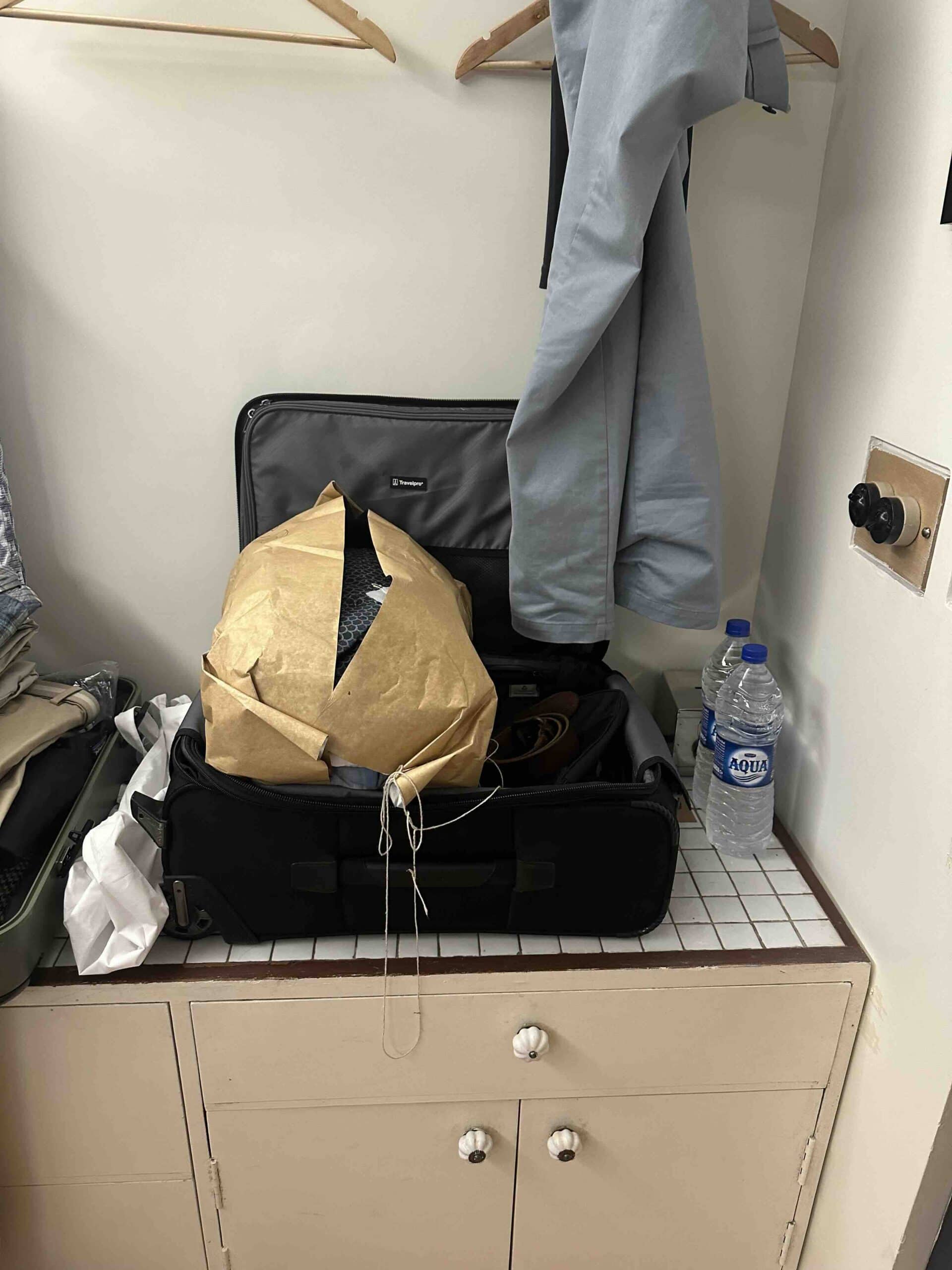
These days, I look for the box when I check in. If the hotel has one, I generally follow its request and leave my gratuity there.
That said, I occasionally encounter someone whose hospitality is exceptional. When that happens, I may thank them directly with a tip in the moment, regardless of whether the hotel has a shared gratuity box.
How Much Should You Tip at Restaurants?
For restaurants with table service, 5–10% is a reasonable guideline for good service.
At a more formal restaurant, I usually look at the bill before deciding what to leave.
Watch for the Service Charge
Some restaurants add a line labeled service charge.
This is not the same thing as GST, India’s Goods and Services Tax.
Under India’s consumer-protection rules, restaurants cannot automatically impose a mandatory service charge. It must be voluntary.
If you find one added to your bill, you can ask for it to be removed.
If you’ve voluntarily paid a service charge, there’s no obligation to leave another gratuity. You can still choose to give something directly to the server if the experience has been particularly good.
What About Chai Stalls and Dhabas?
At a small dhaba, chai stall, or street-food counter, tipping generally isn’t expected. That doesn’t mean I don’t leave something.
If uncle-ji makes me an incredible cup of chai and charges ₹15, I’ll leave ₹20. If my bill at a roadside dhaba comes to ₹175, I’ll leave ₹200.
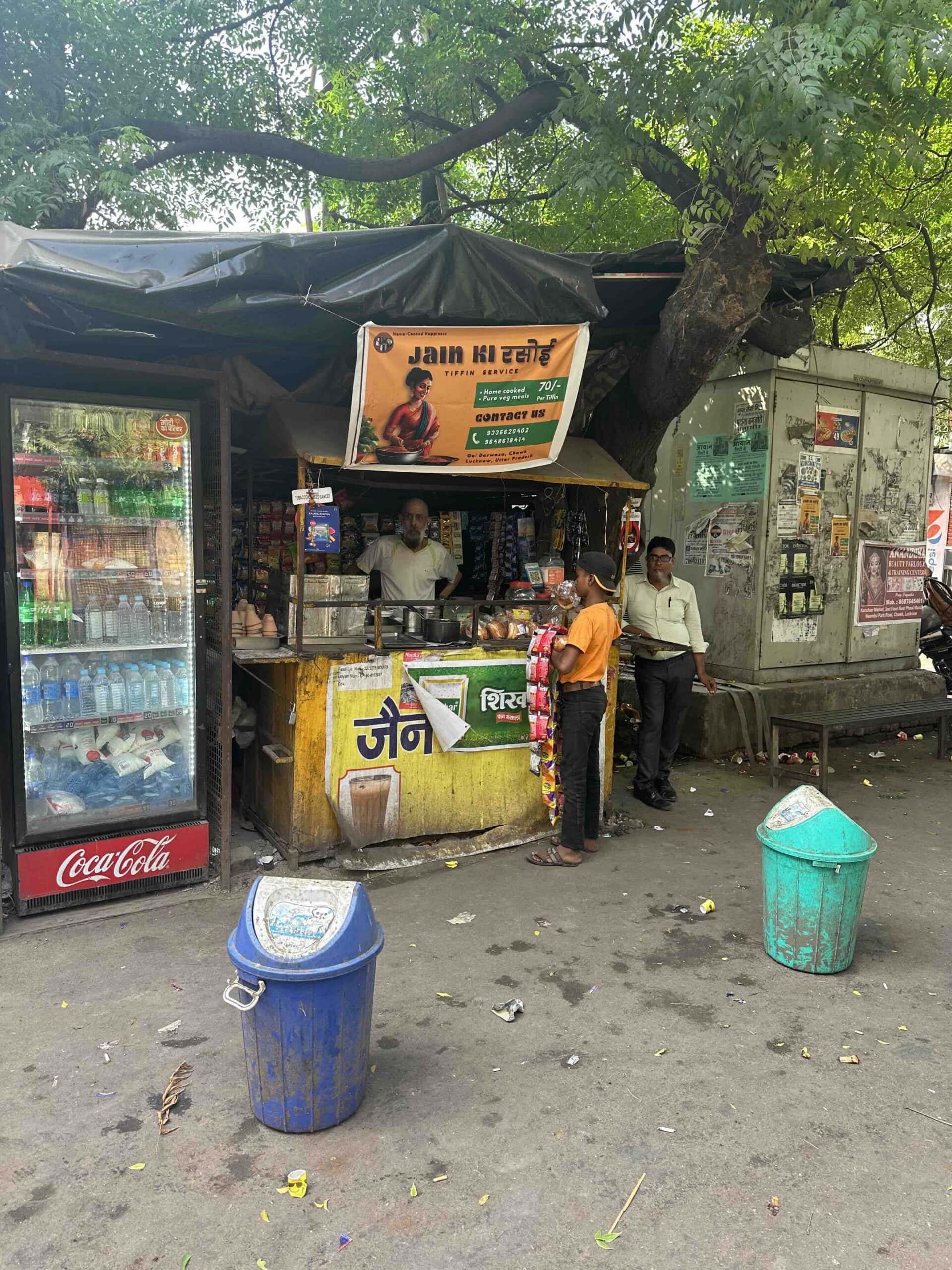
These guys are hustling all day, often serving customers whose individual bills amount to very little. An extra ₹5 or ₹25 isn’t going to make much difference to my travel budget, but it’s a small way of showing appreciation.
I don’t calculate a percentage. I simply round up to an amount that feels appropriate.
Tipping for Airport Transfers, Taxis, and Auto-Rickshaws
For an airport transfer, ₹100–₹300 is a reasonable gesture, particularly if the driver helps with luggage, waits through a delayed arrival, or provides especially helpful service.
For an ordinary taxi or auto-rickshaw ride, I take much the same approach as I do with chai stalls and dhabas.
If the fare is ₹75, I’ll hand over ₹80. If it’s ₹190, I’ll make it ₹200.
And if you’ve agreed on a fare before setting off, paying that amount is perfectly acceptable. A tip isn’t compulsory.
When You Don’t Need to Tip
You don’t need to tip someone simply because they’ve sold you a bottle of water, handed you a cup of chai, or completed an ordinary retail purchase.
Nor should you feel obliged to hand over money simply because someone asks.
There’s a difference between a voluntary gratuity and an unexpected demand for additional payment.
That distinction leads to another Indian concept: baksheesh.
The word can refer to a tip, gift, or small payment, although its meaning depends heavily on the circumstances. Sometimes it’s a harmless expression of appreciation. Other times, the situation is considerably less straightforward.
I’ve explored that distinction separately in What Is Baksheesh in India? Tips, Bribes, and the Money In Between.
A Few Practical Tipping Tips
- Keep smaller rupee notes available. ₹50, ₹100, ₹200, and ₹500 notes are useful for different situations.
- Consider the entire group. A suggested amount for a driver or guide doesn’t necessarily need to be multiplied by every passenger.
- Check what’s included. Some organized tours already include gratuities, while others leave them entirely to the traveler.
- Plan ahead for longer journeys. Whether you’re using cash or a money-transfer service, don’t leave a substantial tip until the last possible moment.
- Give discreetly. There’s no need to turn a gratuity into a public event.
Join the Conversation
I’ve heard wildly different advice about tipping in India, including from Indian friends and the travel companies arranging my trips.
If you’ve traveled through India with a private driver or guide, how did you decide what to give? And if you’re Indian, I’d be particularly interested in your perspective.

 Bindi: What the Dot on the Forehead Means in India
 What Is a Geyser in India? How to Get Hot Water
 How to Wash Clothes in a Bucket in India